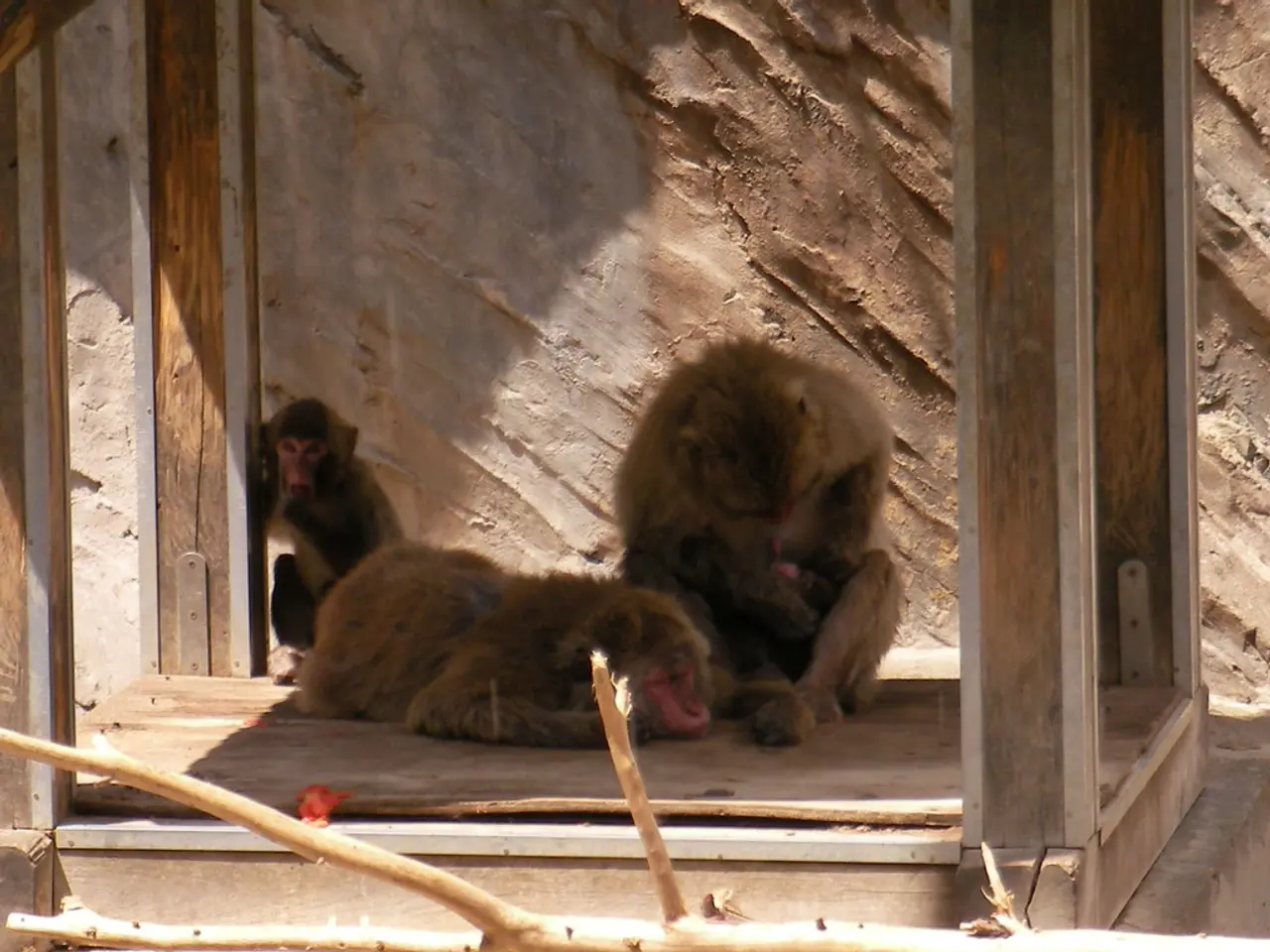
Zoo in Germany euthanizes 12 healthy baboons due to lack of adequate housing facilities
In the German city of Nuremberg, the Tiergarten Nuernberg zoo found itself at the centre of a heated debate after it was forced to euthanize 12 healthy Guinea baboons due to overcrowding and lack of space in their enclosure.
The zoo had been trying to find alternatives for years, including offers to transfer baboons to other zoos that had already reached capacity, and attempts at contraception that ultimately proved unsuccessful. The decision to euthanize the animals was described as a last resort necessary to maintain animal welfare standards.
On Tuesday, the zoo killed the baboons by shooting them in transport crates according to animal welfare regulations. The bodies were then utilized by feeding muscle meat to carnivores like lions, tigers, and wolves at the zoo, with other parts preserved for research and museum collections.
The practice of euthanizing healthy animals in zoos is legally permitted under animal welfare laws when overcrowding threatens the well-being of animals, but it remains ethically and socially contentious. Animal rights groups have filed complaints against the zoo's actions, alleging that the killings violated animal protection laws and that the zoo failed in its breeding management.
The group of activists, Pro Wildlife, has been particularly vocal in their criticism. Laura Zodrow, a spokesperson for the group, stated that the baboon killings were "avoidable and, from our point of view, unlawful."
The zoo's plans to kill baboons it didn't have space for were announced in February 2024, drawing criticism from animal protection groups and resulting in protests at the zoo. The zoo's deputy director, Joerg Beckmann, defended the decision, stating that the chosen baboons were not pregnant females or part of studies and were shot.
The zoo's Guinea baboon population had grown to 43, exceeding the capacity of a house opened in 2009 for 25 animals plus their young, leading to conflicts among the animals. The zoo said it was unable to make any offers to take in some of the animals.
On Tuesday morning, the zoo announced it was closing for the day for unspecified "operational reasons." Seven activists climbed over a wall into the zoo on Tuesday afternoon, and one woman glued her hands to the ground in protest. The incident resulted in the group being detained a few yards inside the entrance.
The controversy surrounding the euthanasia of the baboons highlights the ongoing debate about population control measures and alternatives in zoos. European regulations generally permit euthanasia for reasons including overcrowding, population management, or welfare concerns, provided it follows strict animal welfare guidelines. However, the practice remains a sensitive issue, with calls for better population control measures and alternatives to euthanasia.
In the midst of the debate, the Tiergarten Nuernberg zoo, after exhausting alternatives like transferring baboons and contraceptive methods, resorted to conducting scientific research on the euthanized baboons, also donating muscle meat to carnival animals and preserving other parts for health-and-wellness purposes. The controversial decision to euthanize healthy animals has spurred protests from animal rights groups, who allege that the practice violates animal protection laws.