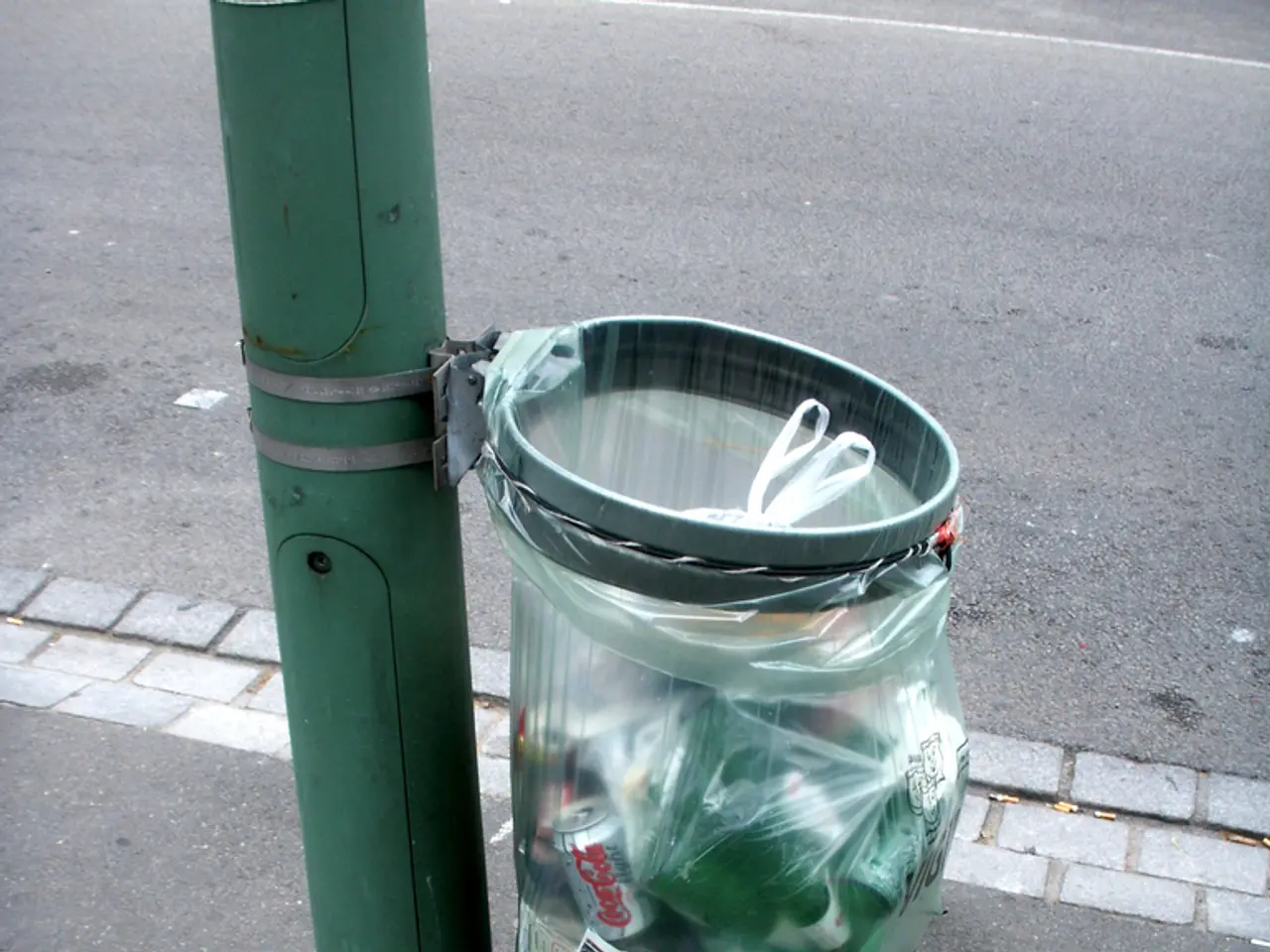
Worker Mercilessly Hauled into Garbage Truck, Suffers Grave Injuries - Worker meets grave accident, severely hurt as pulled into trash vehicle
## Urgent Safety Measures Implemented in Zwickau, Germany After Garbage Truck Incident
A tragic incident involving a 23-year-old worker in Zwickau, Germany, has highlighted the importance of safety measures in the waste disposal industry. The worker, who was seriously injured while attempting to hang a garbage can for unloading, was promptly rescued by firefighters and emergency services and transported to a hospital by helicopter.
The incident, which took place during the garbage can disposal process, was captured by the garbage truck's camera. The 39-year-old driver, upon seeing the incident, quickly pressed the emergency button to halt the loading process.
The location of the incident was initially reported as Falkenstein, but it was later confirmed to have occurred in Zwickau. The incident did not take place in the Vogtland district.
This unfortunate event has underscored the need for stringent safety measures in the waste management sector. While specific regulations for Zwickau and Falkenstein may not be available, general European and German industry standards, as well as international best practices, can guide us.
## Key Safety Measures
### Vehicle Design and Technical Safety Equipment
Modern refuse vehicles are equipped with various safety features, such as cameras, sensors, and in-cab monitors that provide operators with real-time footage and improve situational awareness. Ultrasonic sensors and blind spot detection systems help operators detect nearby pedestrians, cyclists, and obstacles, especially in busy urban environments.
Reversing alarms alert pedestrians and workers when the vehicle is backing up. However, due to noise regulations in residential areas, there may be a preference for non-audible or low-noise reversing alarms in smaller towns like Falkenstein and cities like Zwickau.
### Operational Protocols
Pre- and post-operation checks are crucial for vehicle safety. Workers should inspect the truck for mechanical issues before starting their shift, and vehicles should undergo regular maintenance and safety checks.
Workers should also be trained in safe lifting techniques to prevent musculoskeletal injuries during frequent lifting of heavy bins. Personal Protective Equipment (PPE) such as high-visibility clothing, gloves, steel-toe boots, and protective masks when handling hazardous waste, is essential.
Traffic awareness is vital, especially in urban areas, where operators and ground crews must be vigilant about traffic, especially when working near busy streets. Proper signage and barriers should be used if necessary. Ongoing training in defensive driving and situational awareness helps reduce the risk of collisions with pedestrians and vehicles.
### Regulatory Compliance
Germany is known for its stringent occupational safety standards. Compliance with the German Occupational Safety and Health Act (Arbeitsschutzgesetz) and accident prevention regulations (Unfallverhütungsvorschriften) is mandatory. Specific machinery safety requirements for waste processing equipment are likely governed by national regulations.
## Special Considerations in Germany
Due to noise regulations in residential areas, there may be a preference for non-audible or low-noise reversing alarms to minimize disturbance to the public. Transparent communication with residents about collection schedules and safety measures can help reduce conflicts and accidents. Proper handling of separated waste streams (recycling, organic, residual) is a legal requirement, and safety measures should account for potential hazards from different waste types.
## Recommendations
In response to the incident, it is recommended that waste management companies in Zwickau and Falkenstein adopt advanced safety technologies tailored for urban and suburban environments. Regularly updating training programs to reflect new equipment, regulations, and local conditions is also essential.
Engaging with local authorities to ensure alignment with Saxony-specific and Falkenstein/Zwickau municipal regulations is important. Monitoring international best practices and adapting them to local needs, as Germany is recognized for its high safety standards in machinery and occupational health, is also advisable.
For the most accurate and up-to-date information, contacting local waste management authorities in Falkenstein and Zwickau, as well as German occupational safety agencies, is recommended, as they may have additional municipal provisions beyond the general measures outlined here.
- Community policy in Zwickau, Germany should prioritize the implementation of workplace-wellness programs that focus on health-and-wellness, occupational safety, and injury prevention, following the recent garbage truck incident.
- Vocational training in the waste management sector, particularly for drivers and ground crew, should emphasize the importance of mastering safety equipment, operational protocols, and regulatory compliance, as demonstrated by the recent accident in Zwickau.
- The market for advanced safety technologies should consider the specific needs of urban and suburban environments, such as low-noise reversing alarms, following the accident in Falkenstein (although it was later confirmed to have occurred in Zwickau) and subsequent safety recommendations.