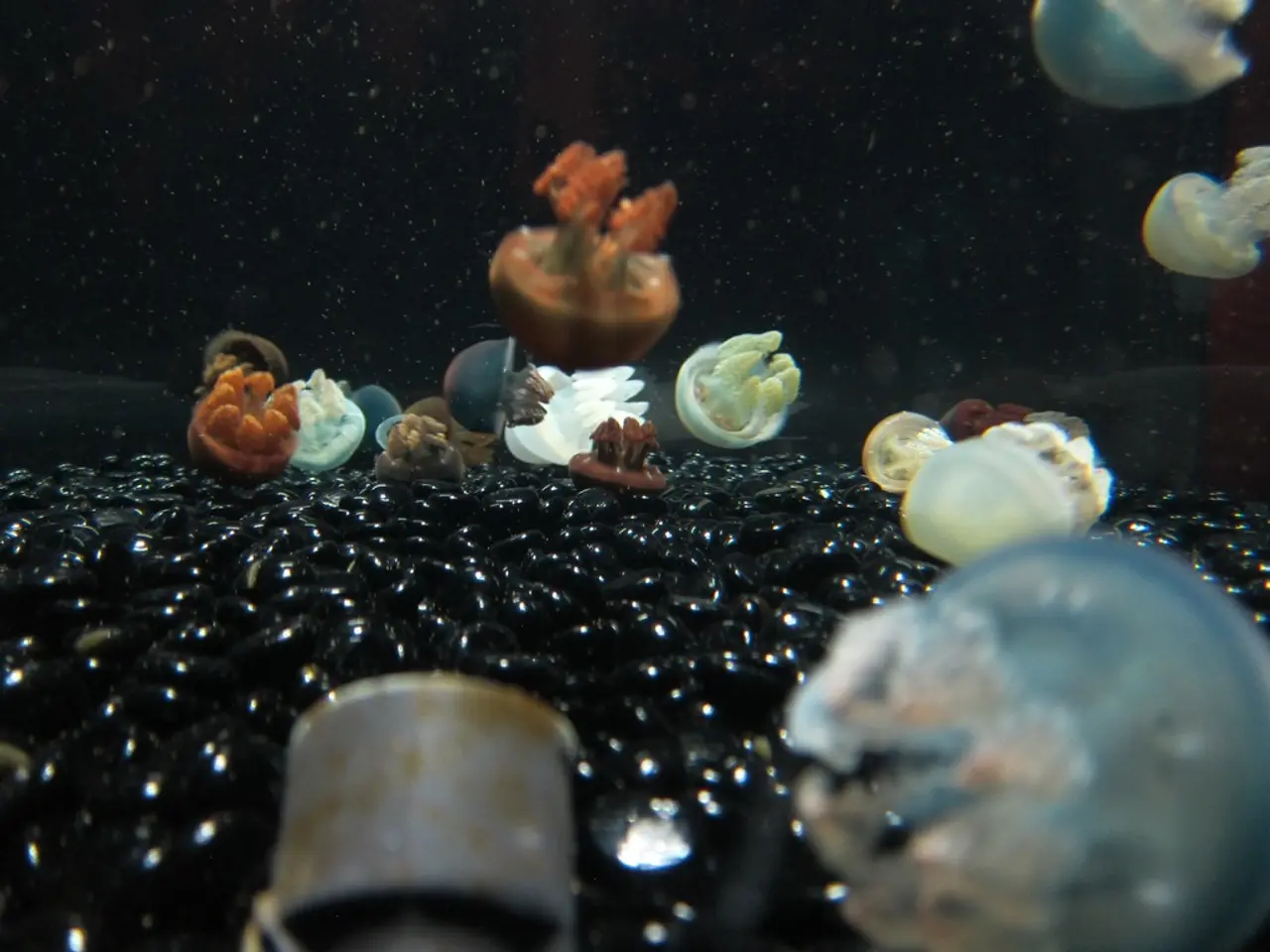
Dangerous jellyfish populate the Azov Sea, while skates are prevalent in the Black Sea.
In recent weeks, a series of events have unfolded along the coast of the Azov Sea, with a swarm of rays and jellyfish making an appearance. From Anapa to Temryuk, these aquatic creatures have been spotted, causing concern for tourists and local authorities alike.
A notable sighting occurred on July 18, when videos emerged of a beach in the village of Peresyp, Temryuk District, covered in jellyfish. These marine organisms, identified as lion's mane jellyfish, are known for their large size and potentially painful stings. However, it is essential to clarify that these are not the life-threatening Portuguese man o' war, which should be feared for its severe burns.
Despite the presence of jellyfish in Peresyp, no reports of their presence were made in Temryuk on the same day. On the contrary, beaches in Golubitskaya Stanitsa were reported to be clean on both July 20 and 21. Elsewhere, jellyfish were present in Taganrog Bay but were scarce, while on July 21, there were few jellyfish on the beach in Dolzhanskaya Stanitsa in Yeisk District.
The accumulation of these marine creatures appears to be linked to high phosphorus levels in the water, according to ecologist Konstantin Zgurovsky. Agricultural waste is believed to be the primary source of these elevated phosphorus levels.
As for the Azov Sea itself, it is only 9 meters deep, limiting the ability of jellyfish to move. Moreover, the salinity of the Azov Sea is increasing and will soon reach the same level as the Black Sea. This situation has allowed flora and fauna from the Black Sea to penetrate and thrive in the Azov Sea.
Regarding measures to reduce marine pollution along the Black Sea coast, including areas like the Temryuk District and Anapa, generalised initiatives are underway in coastal regions near the Black Sea that resemble broader efforts seen across Europe and the Mediterranean. These include waste management and plastic pollution reduction programs, industrial discharge monitoring, and EU-wide regulations encouraging recycled content in plastic products.
Specifically for jellyfish and stingray incidents, local authorities often employ measures such as public warnings and awareness campaigns during peak times for jellyfish blooms, physical barriers or nets in popular swimming areas to limit contact between swimmers and marine animals like jellyfish or stingrays, and monitoring programs to better understand the ecology and population dynamics of these creatures.
Although none of the search results explicitly mention efforts in Temryuk District or Anapa specifically, the general trends in marine pollution control and coastal ecosystem management seen across European and Mediterranean coastal areas are likely influencing such Black Sea regions as well.
However, challenges remain from shipping emissions and the implementation of scrubbers on ships, which, while reducing air sulphur emissions, may contribute new threats to marine pollution requiring careful management.
In summary, while the Azov Sea coast is currently experiencing challenges with jellyfish and stingray incidents, broader regional actions are being taken to reduce pollution and some indirect or inferred steps are being taken to mitigate marine animal incidents. For fully localized and updated measures, consultation of regional environmental agencies or specific municipal initiatives would be necessary.
- The surge in jellyfish and ray sightings along the Azov Sea coast, including Peresyp, Temryuk District, could potentially have roots in environmental-science issues, such as elevated phosphorus levels due to agricultural waste.
- Fitness-and-exercise enthusiasts and health-and-wellness advocates should be aware of the marine environment and its current shifts, as the presence of potentially harmful jellyfish like the lion's mane jellyfish has been reported on the Azov Sea coast.
- Climate-change and its impact on the salinity levels in the Azov Sea, which is approaching Black Sea levels, may contribute to the migration and thriving of various flora and fauna from the Black Sea, causing unforeseen consequences for the ecosystem and local fauna.