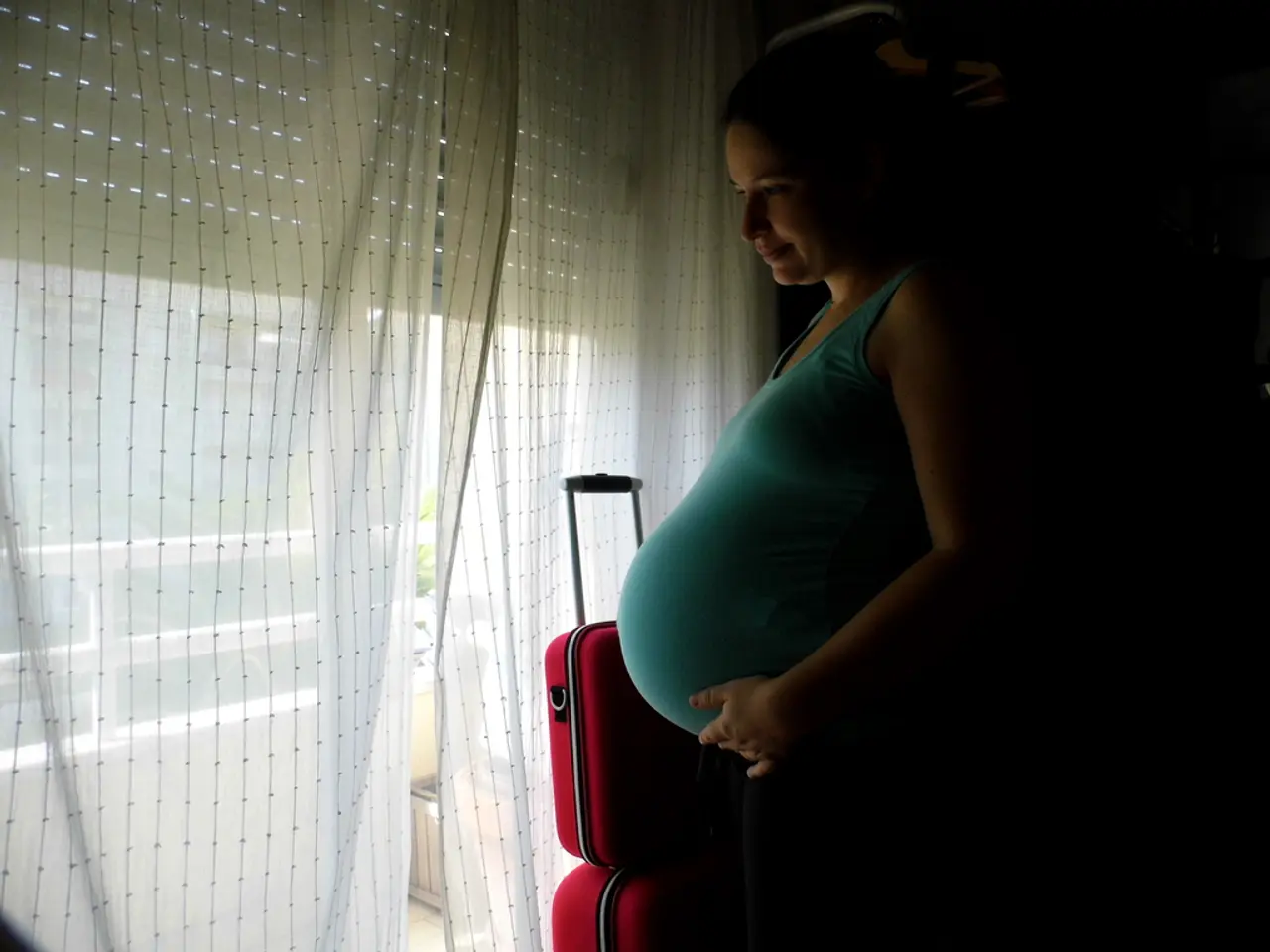
Challenges Faced by Many Pregnant Women in Early Pregnancy Stages
In the first trimester of pregnancy, expectant mothers face a crucial period with various risks and symptoms. Approximately 10-15% of pregnancies result in miscarriage, with 80% happening during this initial phase [1].
Common symptoms experienced during the first trimester include nausea and vomiting (morning sickness), fatigue, frequent urination, headaches, and sleep disturbances [2]. While morning sickness is the most common affliction, it's essential to address these symptoms to maintain a healthy pregnancy.
One of the most significant risks during the first trimester is infections such as urinary tract infections (UTIs). These infections need to be treated carefully, as some antibiotics like trimethoprim-sulfamethoxazole (TMP-SMX) have been linked to an increased risk of congenital malformations [3][5]. Nitrofurantoin appears to be a safer alternative for treating UTIs in the early stages of pregnancy.
Swelling in the first trimester, especially in the face and hands, could be an indicator of preeclampsia, a serious condition that can develop later in pregnancy [1].
To sustain a healthy pregnancy, pregnant women are advised to avoid substances that increase miscarriage risk or harm fetal development, such as alcohol, certain medications, and tobacco [4]. Managing common symptoms can also help, for example, eating small frequent meals can help with nausea, while increasing fiber, fluids, and exercise can alleviate constipation [2].
Prioritizing good sleep hygiene, despite common sleep difficulties, is crucial. This includes establishing an earlier bedtime to accommodate fatigue and managing discomfort from symptoms like heartburn and nausea [1].
It is essential for pregnant women to undergo routine prenatal care, including screenings for infections, and to seek immediate medical attention if there is heavy bleeding, severe pain, or other alarming symptoms [2].
In addition to these precautions, expectant mothers should be aware of other potential risks such as ectopic pregnancies, which occur when a fertilized egg implants outside the uterus, and can cause a fatal bleed [2].
Calf pains during the first trimester could be an indicator of a traveling blood clot, and pregnancy increases the chances of developing blood clots, known as Deep Vein Thrombosis [6].
Extreme morning sickness can increase the risk of dehydration and reduced nutrition for the mother and foetus, and diarrhoea that lasts more than 3-4 days should be reported to the doctor, as it could lead to dehydration and weakness [2].
Vaginal discharge, itching, or redness could indicate an infection, and if wheezing, palpitations, or coughing accompany shortness of breath, it should be reported to the doctor immediately [7].
Implantation bleeding in pregnancy is common and not cause for alarm, but other reasons such as cervical polyps can lead to spotting and bleeding [8].
Lastly, pregnancy increases the chances of developing blood clots, and clots in the leg veins are known as Deep Vein Thrombosis. After 20 weeks of pregnancy, swelling is considered normal in most women due to a change in blood volume and blood flow [6].
By following these guidelines, expectant mothers can improve their chances of maintaining a healthy pregnancy through the critical early stages. Eating a balanced diet, appropriate exercise, and avoiding alcohol and cigarettes are key to sustaining pregnancy, while timely medical attention and self-care can help manage potential risks and symptoms.
Parenting during the first trimester of pregnancy requires careful attention to health and wellness, as various symptoms and potential risks may arise. For instance, managing common symptoms like morning sickness, fatigue, and constipation can help maintain a healthy pregnancy [2]. Additionally, prioritizing science-backed health practices, such as good sleep hygiene and dietary adjustments, can further support the expectant mother's health and the development of the growing fetus [1].