Artificial Intelligence in Medical Fields: AI-assisted Medical Solutions
In the ever-evolving world of healthcare, Artificial Intelligence (AI) and Machine Learning (ML) are making a profound impact on the MedTech industry. These cutting-edge technologies are redefining the way medical institutions operate, offering numerous benefits for both physicians and patients.
One of the most significant advancements is the rise of digital therapeutics. By analysing patient data, AI enables personalised and adaptive treatments, dynamically adjusting interventions based on real-time feedback and predictive analytics. This level of precision improves outcomes and makes therapy more scalable and accessible.
Virtual Reality (VR) is another area where AI is making a mark. Combined with AI, VR is being used for immersive medical training, pain management, rehabilitation, and mental health therapies. AI algorithms enhance VR by personalising therapy sessions to patient responses and predicting optimal intervention paths, resulting in better treatment adherence and recovery rates.
The Internet of Medical Things (IoMT) is also benefiting from AI. By analysing continuous patient monitoring data, AI helps in early detection of issues, predictive maintenance of medical devices, and optimising clinical workflows. This leads to faster clinical decision-making and reduces hospitalisation rates.
Software as a Medical Device (SaMD) powered by AI is increasingly used for diagnostics, monitoring, and treatment recommendations. AI algorithms improve the speed and accuracy of medical image interpretation, such as X-rays, MRIs, and pathology slides, thus supporting early disease detection, for example in cancer and cardiovascular conditions.
AI-based medical chatbots are advancing from administrative support to clinical assistants, providing symptom checking, medication reminders, and initial triage. By leveraging large language models and clinical knowledge databases, AI chatbots help reduce physician workload, improve patient engagement, and direct users to appropriate care faster, while maintaining safety through human oversight.
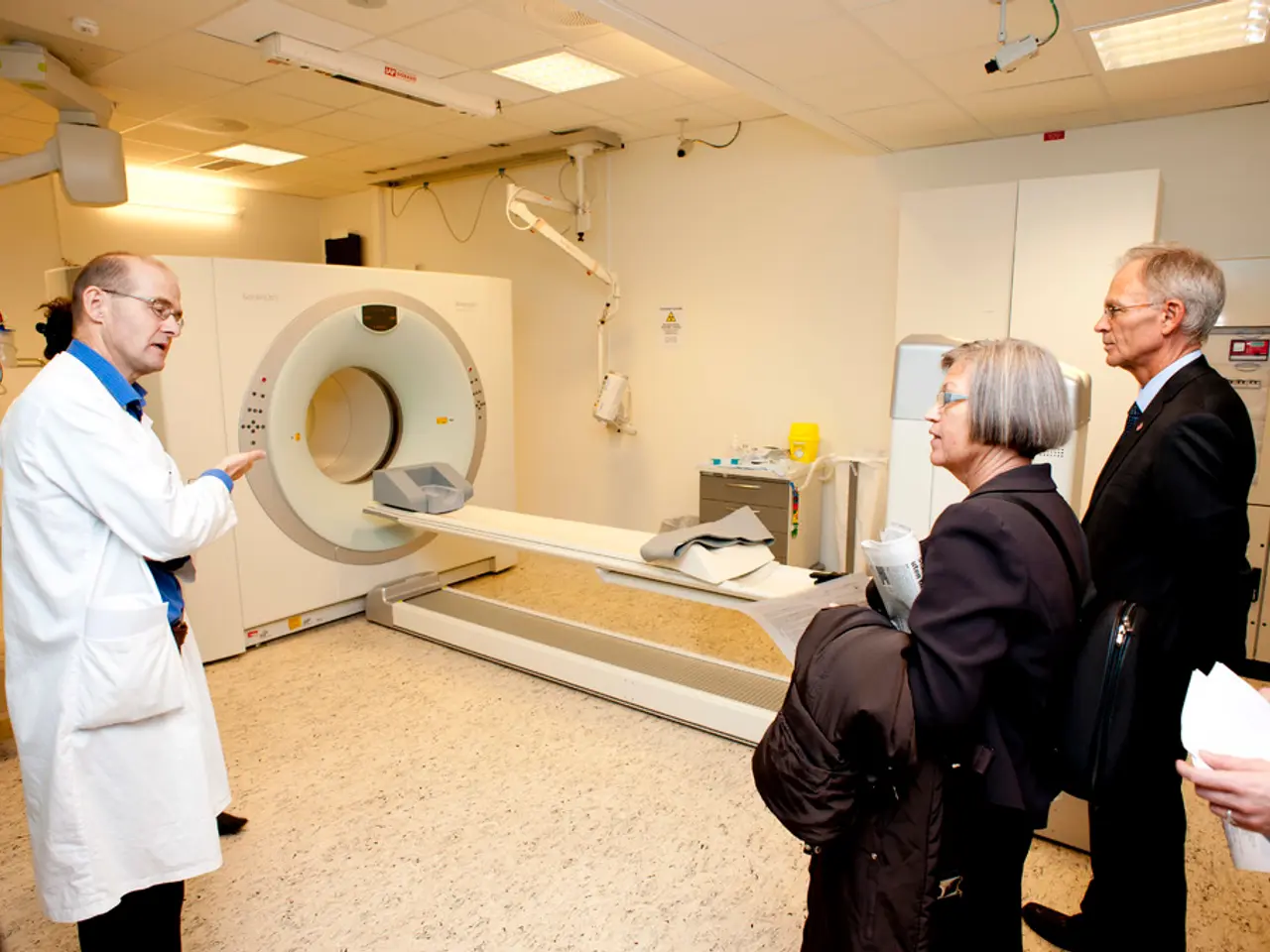
X-ray scanning Machine Learning algorithms are transforming radiology by enhancing the detection of subtle abnormalities in X-rays and other imaging modalities. They assist radiologists by flagging potentially concerning areas that may be missed, particularly for early-stage cancers and other diseases where timely diagnosis is critical. FDA-approved AI tools are now integrated into clinical workflows, helping improve diagnostic accuracy and efficiency.
Looking to the future, AI will continue to automate administrative tasks, clinical documentation, and routine diagnostics, enabling healthcare providers to focus more on patient care. Personalised and precision medicine will become more prevalent, with AI-driven analysis of genetic, imaging, and clinical data enabling highly tailored treatment plans and monitoring therapeutic responses dynamically.
Faster drug discovery and development is another area where AI is making strides, reducing timelines from years to months by efficiently identifying promising compounds and optimising clinical trials. Regulatory frameworks are evolving to manage the safety and efficacy of these AI-driven solutions.
However, as AI penetrates more aspects of healthcare, managing patient data privacy, algorithmic transparency, and bias mitigation will become essential. The growth of AI in medical devices and software will prompt further development of regulatory frameworks ensuring safety without hampering innovation.
In conclusion, AI and ML are revolutionising MedTech by enhancing early detection, personalised treatments, clinical efficiency, and drug discovery. The integration of AI across digital therapeutics, VR, IoMT, SaMD, AI chatbots, and medical imaging will lead to improved patient outcomes, optimised healthcare delivery, and a more proactive, data-driven healthcare ecosystem in the near future.
Apps will play a significant role in the interaction between patients and technology-based medical solutions. Partnering with an experienced MedTech app development company can help build a world-class MedTech app since 2007. AI has also made significant progress in protein research through the use of potent algorithms and large amounts of data.
[1] "Artificial Intelligence in Healthcare: An Overview" - IEEE Access [2] "The Role of AI in Healthcare: A Systematic Review" - Journal of Medical Systems [3] "Accelerating Drug Discovery with AI" - Nature Medicine [4] "Regulatory Considerations for AI in Medical Devices" - Food and Drug Administration (FDA)
- The burgeoning integration of AI in Virtual Reality (VR) is revolutionizing medical training, pain management, rehabilitation, and mental health therapies, improving treatment adherence and recovery rates.
- In the realm of MedTech, software development, particularly Software as a Medical Device (SaMD), is increasingly leveraged for diagnostics, monitoring, and treatment recommendations, aided by AI algorithms that enhance speed and accuracy in medical image interpretation.
- AI is also reshaping the Internet of Medical Things (IoMT) by analyzing continuous patient monitoring data for early detection of issues, predictive maintenance, and optimizing clinical workflows, thereby reducing hospitalization rates.
- Mobile applications, key interfaces between patients and technology-based medical solutions, will play a significant role in this digital health transformation brought about by AI.
- AI is making strides in health and wellness by powering medical chatbots that move beyond administrative support to assisting in clinical decisions, improving patient engagement, and directing users to appropriate care faster.
- The development and design of user interfaces (UI) in the medical field are being influenced by AI, as they adjust dynamically based on real-time patient data and user responses, enhancing accessibility and usability.
- Web-based platforms, essential for disseminating health-relevant information, are being enriched by AI algorithms to better tailor content for individual users, contributing to a more personalized and proactive healthcare ecosystem.